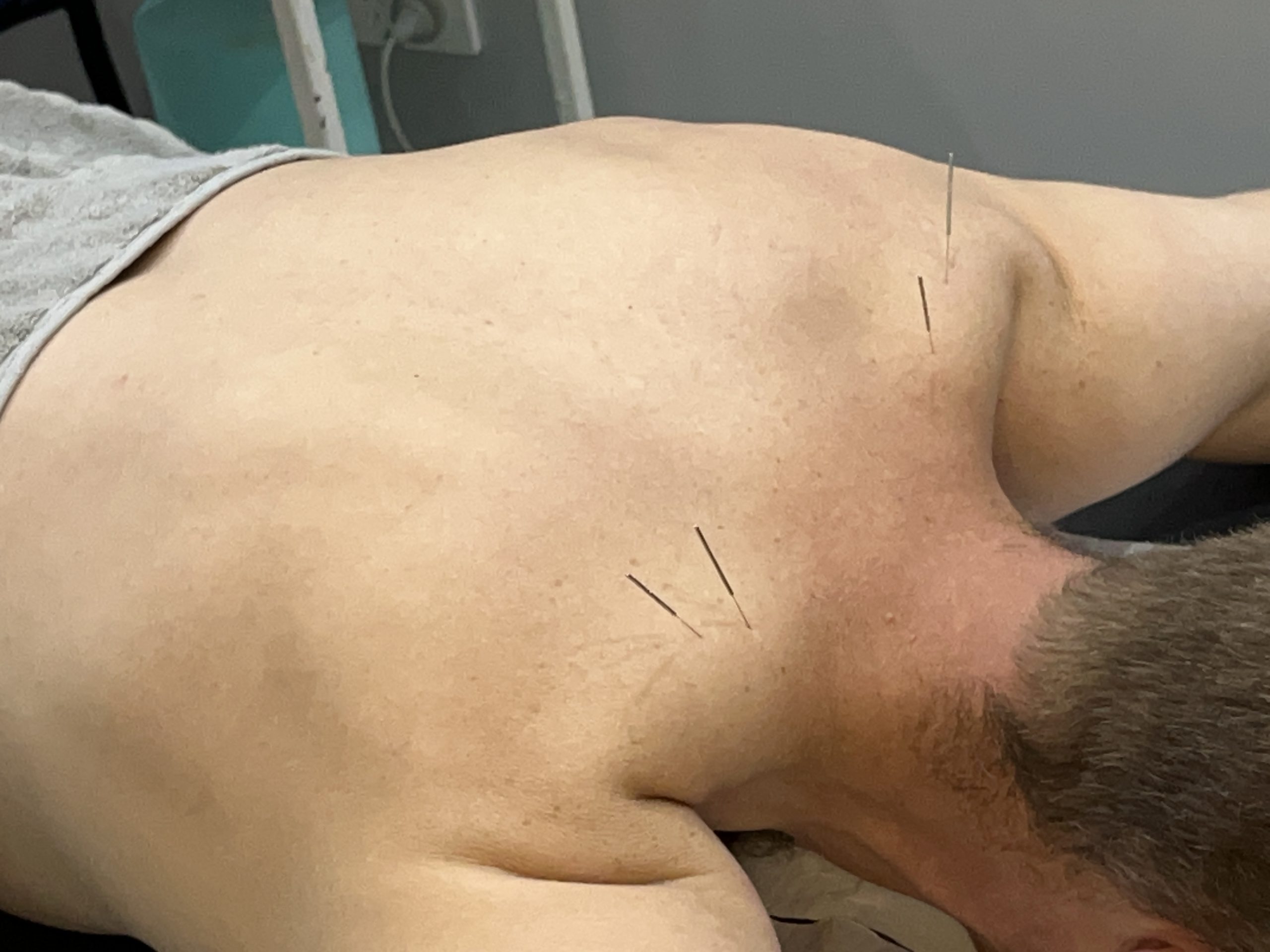
Dry needling is an adaptation of Chinese Acupuncture however is based on the Western Medicine  knowledge of anatomy, physiology and pathology and the principles of evidence based medicine. The treatment involves insertion of  thin needles into myofascial trigger points (knots) to stimulate healing, promote circulation, relieve muscle tension/spasm and relieve pain.

What Is Dry Needling?

Dry needling is similar to Acupuncture which was invented by the Chinese, and it has been used for more than 3000 years. In Traditional Chinese medicine, it is believed that life-energy known as “qi” (ch-i) flows through the body through channels called meridians. Acupuncture is the practice of inserting needles into the skin on certain points of a meridian, to restore the flow of energy, and thereby stimulate healing.

Effects of dry needling

Research has shown that dry needling has the following effects:  immediately increase pressure pain threshold and ROM (range of motion), decrease muscle tone, and decrease pain in patients with musculoskeletal conditions1

What conditions can be treated by dry needling?

Conditions Treated by Dry Needling

Dry needling can effectively treat a variety of conditions, including:

  • Knee osteoarthritis
  • Plantar fasciitis
  • Cervicogenic headaches
  • Tension-type headaches and migraines
  • Low back pain with or without radiculopathy
  • Neck pain
  • Internal shoulder impingement syndrome
  • Lateral epicondylalgia (tennis elbow)
  • Carpal tunnel syndromeUnderstand the science of dry needling: a modern, evidence-based therapy designed to release muscle tension and improve circulation.

    An educational infographic explaining dry needling. It covers definitions, how the therapy works, a comparison with acupuncture, and proven benefits like improved range of motion and pain reduction.

An infographic titled "Conditions We Treat with Dry Needling" listing eight common medical conditions. The graphic features a central winding timeline-style design with anatomical illustrations highlighting specific areas of pain or injury for each condition.
Discover how dry needling can help manage chronic pain and musculoskeletal issues, from migraines to carpal tunnel syndrome.

How We Can Help

We have personally found good therapeutic effect for Achilles tendinopathy/bursitis headaches, neck pain, whiplash and shoulder pain.
 

If you’re experiencing pain or muscle tension, dry needling might be the solution you need.

Our experienced practitioners at Healthy Movements Physiotherapy will assess your condition and develop a personalized treatment plan to help you achieve relief and improve your quality of life.
FAQ – Neurological Physiotherapy

Dry needling is a therapeutic technique that involves inserting thin needles into specific muscle knots, known as myofascial trigger points, to relieve pain and muscle tension. Unlike acupuncture, which is based on traditional Chinese medicine principles and focuses on restoring the flow of “qi” through meridians, dry needling is grounded in Western medical knowledge of anatomy and physiology.

Dry needling can be effective for a variety of conditions, including:

  • Knee osteoarthritis
  • Plantar fasciitis
  • Cervicogenic headaches
  • Tension-type headaches and migraines
  • Low back pain with or without radiculopathy
  • Neck pain
  • Internal shoulder impingement syndrome
  • Lateral epicondylalgia (tennis elbow)
  • Carpal tunnel syndrome It is also beneficial for Achilles tendinopathy/bursitis, headaches, whiplash, and shoulder pain.

Most patients experience minimal discomfort during dry needling. You might feel a slight prick when the needle is inserted, followed by a twitch response or mild muscle cramp as the needle targets the trigger point. These sensations are usually brief and indicate that the treatment is effectively stimulating the muscle.

Many patients report immediate relief from pain and improved range of motion after a dry needling session. However, the number of sessions required varies depending on the severity and chronicity of your condition. Our experienced practitioners will create a personalized treatment plan tailored to your specific needs to ensure the best possible outcomes.

Dry needling is generally safe when performed by trained professionals. Some common, mild side effects include soreness, bruising, or minor bleeding at the needle insertion sites. These effects typically resolve within a few days. Serious side effects are rare, but it’s important to discuss any concerns with your physiotherapist before starting treatment.

You do not need a referral to receive dry needling treatment. However, it’s always a good idea to check with your health insurer to ensure that physiotherapy services, including dry needling, are covered under your plan.

Call Now Button