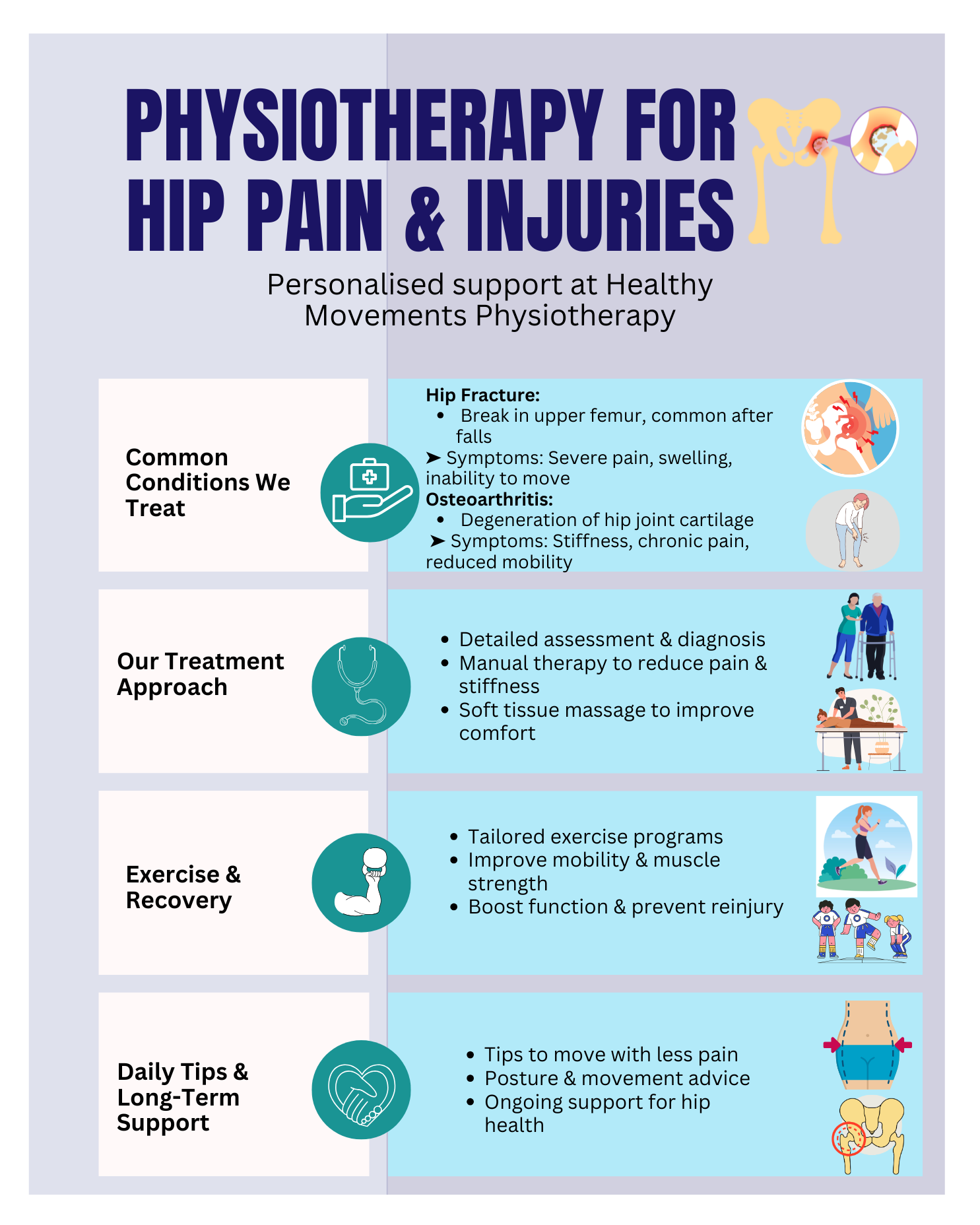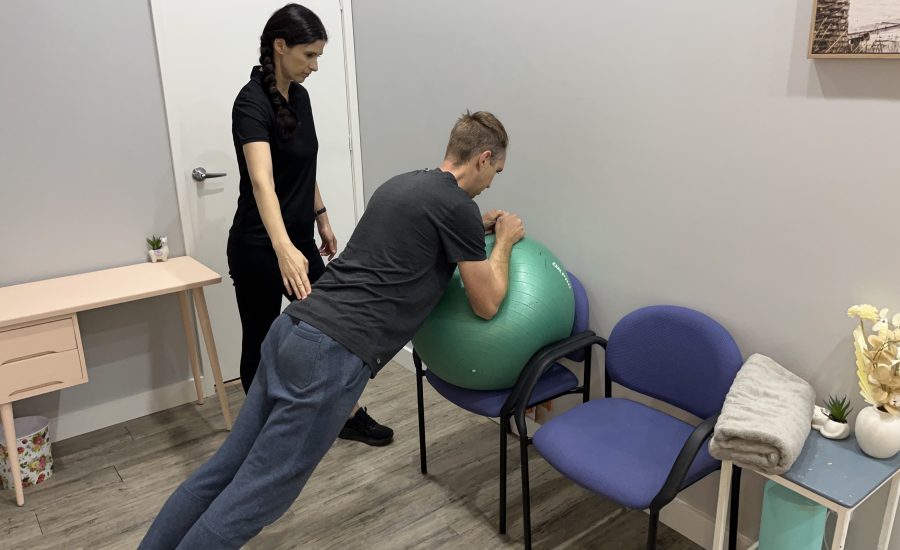
Hip injuries can be painful and limit your ability to move freely. At Healthy Movements Physiotherapy, we’re dedicated to helping you understand your hip injury and providing the care you need to recover fully.

Common Hip Injuries

  • Hip Bursitis:
    • This occurs when the small, fluid-filled sacs (bursae) that cushion the bones, tendons, and muscles near your hip joints become inflamed. Symptoms include sharp pain on the outer part of the hip and tenderness when pressing on the affected area.
Anatomical illustration of hip bursitis showing inflammation of the greater trochanteric bursa on the outer hip.
– Hip bursitis, also called greater trochanteric pain syndrome, causes outer hip pain and tenderness.
– This diagram shows inflammation of the greater trochanteric bursa, often irritated by overuse or friction.
– Symptoms include pain when lying on the side, walking, or climbing stairs.
– Physiotherapy reduces inflammation and strengthens surrounding muscles to prevent recurrence.
  • Hip Labral Tear:
    • The labrum is a ring of cartilage that follows the outside rim of the socket of your hip joint. A tear in this area can cause pain in your hip or groin, a clicking or locking sensation in the hip joint, and stiffness.
Diagram showing an acetabular labrum tear in the hip joint, with highlighted cartilage damage around the rim of the acetabulum.
  • Hip Fracture:
    • This is a serious injury that involves a break in the upper part of the femur (thigh bone). It is common among older adults and usually results from a fall. Symptoms include severe pain, inability to move the hip or leg, and swelling.
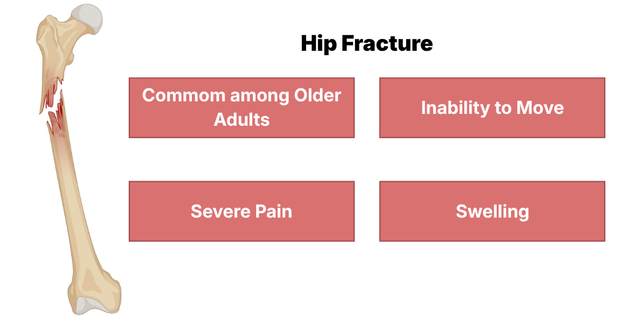
An educational medical infographic titled "Hip Fracture." The left side features an anatomical illustration of a femur bone with a clear fracture breakdown. The right side contains four red text blocks highlighting demographics and symptoms: common among older adults, inability to move, severe pain, and swelling.
Recognize the major warning signs and demographic risks associated with a hip fracture, highlighting acute mobility restrictions and severe pain.
  • Osteoarthritis:
    • This is a degenerative joint disease where the cartilage in the hip wears down over time, causing pain, stiffness, and swelling. It’s more common in older adults but can affect anyone.
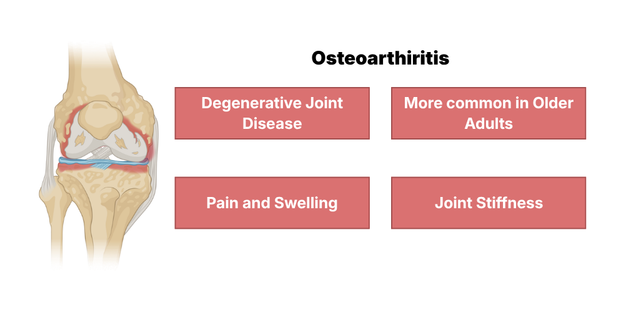
An educational medical graphic titled "Osteo.png" detailing the clinical features of osteoarthritis. The image features a detailed anatomical illustration of a knee joint experiencing cartilage degradation and inflammation on the left, alongside four red text blocks that define the condition as a degenerative joint disease, highlight its prevalence in older adults, and list symptoms like pain, swelling, and joint stiffness.
Understand the core features of osteoarthritis, a common degenerative joint condition causing localized joint stiffness, pain, and swelling.

How We Can Help

At Healthy Movements Physiotherapy, we offer personalized treatment plans tailored to your specific hip injury. Here’s how we help:


Our Commitment to Your Recovery

Your recovery is our top priority. We’re here to support you physically and emotionally throughout your healing process. From pain management strategies to personalized exercise programs, we’re committed to helping you regain your strength and return to the activities you love.

Get Started Today

Don’t let a hip injury hold you back. At Healthy Movements Physiotherapy, we’re dedicated to helping you get back on your feet. Contact us today to book an appointment and start your journey to recovery.

Your health and well-being matter to us. Let’s work together to get you back on track.

Frequently Asked Questions (FAQ) about Hip Pain

Hip pain can be caused by various conditions, including arthritis, bursitis, hip impingement, muscle strains, tendonitis, and referred pain from the lower back. Poor posture, muscle imbalances, and overuse injuries are also common contributors.

If your hip pain is persistent, worsens with activity, affects your mobility, or is accompanied by stiffness or weakness, it’s a good idea to see a physiotherapist. Early intervention can help prevent further complications and speed up recovery.

Physiotherapy can help by identifying the root cause of your pain and providing targeted treatments, such as hands-on therapy, exercises to improve strength and mobility, posture correction, and movement retraining to reduce strain on the hip joint.

The best exercises depend on the underlying cause of your pain. Gentle stretches, hip mobility exercises, glute and core strengthening, and low-impact activities like swimming or cycling can help. A physiotherapist can design a personalised program based on your condition.

Call Now Button