As we get older, things change, but the risk of falling doesn’t have to be an ongoing concern.
For those north of 65 yrs, falls are a leading cause of unintentional injury, and the figures get more interesting when we take a closer look at the Australian population:
In Australia, Falls are responsible for over 42% of injury-related deaths, and over 10% of falls cause debilitating injuries such as hip fractures and head injuries.
The financial burden also proves a menace. Based on current estimates, every fall-related injury costs the health care system about 1,568 AUD.
Now here’s the good news:
There’s so much you can do to cut your risk of falls dramatically, which translates to lower risk of injuries associated with aging. Extensive research done over the past few decades shows that targeted exercises are perhaps the best way to go about this. This article will look at everything you need to know about fall prevention exercises for seniors. We’ll look at the key factors behind higher risk of falls in seniors, how exercise helps with mitigating the risk, and some key exercises you can do at home. Let’s get started.
What I See in the Clinic: Why Falls Become Common with Ageing
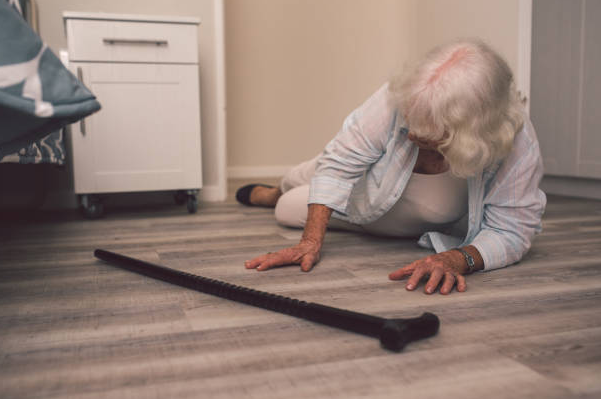
Aging comes with a host of changes at a physical and biochemical level, which alter your efficiency during a variety of physical tasks. This translates to higher risk of falls. Not only that, a number of external factors can increase overall risk when not taken care of.
Internal Factors
Altered Balance
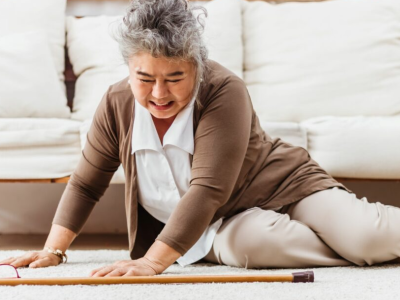
Balance refers to your ability to stay upright and stable, whether in sitting, standing or walking. It’s a complex skill that involves multiple systems that feed information into your nervous system, and associated responses aimed at adapting to different challenges.
Key players include the visual system, vestibular system, and somatosensory systems. Static balance refers to your ability to maintain static positions like sitting or standing. On the other hand, dynamic balance refers to your ability to maintain control during dynamic activities like walking and running. Aging takes a toll on the key systems involved in balance like vision and motor control.
Reduced muscle strength

Muscle strength refers to your muscles’ ability to generate force. Aging comes with muscle-related changes that alter this ability. Key issues include reduced protein production, drops in levels of hormones which drive muscle function, and reduced efficiency in chemical reactions behind energy production.
Altered reflexes
Reflexes are automatic body responses that keep your body stable whenever there’s a challenge or disturbance. Think of the swift, automatic responses you make to change your body’s position whenever someone pushes you or after a misstep.
Your body’s ability to activate these reactions in time after a disturbance decreases with age. Basically, the body requires more stimulation, and takes longer to get these reflexes going.
Altered Joint flexibility
Joint flexibility is the ability of a joint to move through its range of motion. Several factors in and around a particular joint affect the quality and quantity of movement. One of the most influential factors is tightness in structures around the joint i.e muscles, ligaments, joint capsule, and tendons. With age, muscles become less elastic while other structures like tendons and ligaments become stiffer and less extensible.
Vision and hearing loss

Vision is a crucial part of maintaining balance and stability. It works together with other key organs and systems involved in maintaining balance i.e vestibular and proprioceptive systems. Its main role is to provide information relating to spatial orientation while providing movement cues. This is integrated with information from other systems to keep the body in a balanced position.
Aging is associated with structural and biochemical changes in the eye, which affect your ability to process light. Eye lenses become thicker and harder, making focus and close-up vision much harder. Proteins and other substances accumulate, which causes clouding and higher risk of cataracts. Additionally, the overall risk of a wide range of eye conditions like Glaucoma, Macular Degeneration, and Diabetic Retinopathy is significantly higher.
Existing Medical Problems
Most chronic conditions associated with aging i.e Type 2 Diabetes, High blood pressure, and Arthritis come with physical manifestations that affect general physical function: Arthritis has a direct effect on how your joints and muscles function. Poorly controlled Diabetes may disrupt nerve function, and make your muscles less energy efficient.
External/Environmental Factors
As mentioned earlier, the risk of falls in seniors isn’t just about internal changes. The environment can be a handy aid too. Factors such as poor lighting, rough/uneven terrain and slippery surfaces may interact with internal factors, which increases risk of falls exponentially.
How Exercise Helps Reduce Risk of Falls

Based on my years of practice and research studies done over the past decade, fall-prevention exercise programs are one of the most effective ways of reducing falls in seniors. For instance, a key research review published in the British Medical Journal looked into 88 studies, which investigated exercise as a preventive intervention for falls in older adults. The researchers noted a 21% lower risk for individuals involved in balance-oriented exercise programs done 3 times a week.
Three key reasons behind these encouraging research outcomes include:
- Improved strength: Strength and balance exercises help with preventing progressive muscle weakness and severe muscle loss.
- Improve balance: Exercise helps with improving muscle efficiency, facilitating better reflexes, and inspiring more confidence.
- Better flexibility: Flexibility exercises help with maintaining, or improving soft tissue extensibility and joint range of motion. This prevents faulty movement patterns and lowers the risk of falls.
Abby’s story gives us great insights on how exercise can be a gamechanger when it comes to lowering risk of falls for seniors.
She’s a 75-year old who walked into our clinic with a crutch to assist a struggling left leg. She quickly revealed she’d had a total hip replacement about 2 weeks earlier.
A dig into the history showed she’d sustained a fracture of the femur(thighbone) due to a fall. Unfortunately, the fracture occurred at an area without a rich supply of blood vessels, known as the “neck of femur”. To make matters worse, the hip joint on the same side had advanced Arthritis. The surgeons recommended total hip replacement.
She was later on reffered to our clinic for long-term management after a few days in the hospital.
We focused on getting her off the crutch and getting her walking back to near normalcy within 3 weeks, which we accomplished. However, we recognised the high risk of falls based on her history. Apparaently, she’d been struggling with frequent falls(about 2 times a week) before the injury.
We engaged on a 6 week program(3 times a week), combining balance drills and strength training. The balance drills focused on improving her capacity to handle body weight in a wide range of static and dynamic activities.
Strength training involved a variety of exercises aimed at building her core and lower body muscle strength.
The results were amazing:
She’s now on the 30th day of her daily 30-minute brisk walking challenge. No falls, no complaints so far.
Looking to get professinal help for you or someone? Check out our aged-care services here. Alternatively, you can talk to us through our contact page here.
Home Exercises for Falls Preventions
Let me make this clear before we jump into the exercises: It’s always prudent to consult a professional before going full throttle on these moves. The good thing is most of the balance exercises are relatively easy to execute, and do not need any special equipment to get things done.
Balance Exercises
One foot stance
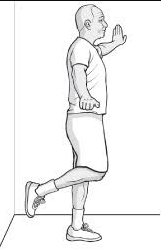
This simple exercise is more than just a balance drill. It’s also a quick test that tells me more about your static balance in standing position. The reason it works well as an exercise is that it helps you improve your ability to handle your bodyweight on a single leg, which is a key element of various activities like walking and running.
How to do it
- Start with a tall, balanced stance facing a stable platform/object i.e chair, table, wall. Your feet should be comfortably set at shoulder width distance.
- Place your hands on the wall or chair to assist with balance.
- Lift one foot off the floor. Hold for 10 seconds. Repeat on the other side.
Common Mistakes I see patients Make
- Overcompensation: The most common mistake I see patients make is leaning sideways to put as much weight as possible through the wall. Try to stay straight and use the wall for that extra support.
Progression
- Get rid of the extra support. Try holding the stance without using the wall or chair.
- Try holding the single leg stance with eyes closed.
Safety Considerations
- Make sure you perform the exercise close to a wall or anything stable to avoid a fall in case you lose balance.
Step ups
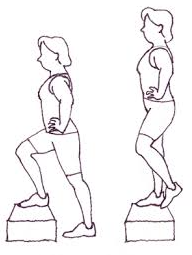
If I had to pick an exercise that easily carries over to your ability to handle things like stairs, curbs, or simply rough terrain, the Step-up should be the go-to move. Like the one-leg stance, this exercise is a great way of challenging your dynamic balance on one leg.
How it's Done
- Start by standing upright, about a step away from a step/similar raised platform.
- Place one foot on the step.
- Step up onto the platform with the trailing foot.
- With control, return the trailing foot to the starting position.
- Repeat the movement, aim for 10 reps before switching to the other side.
Common Mistakes I see
- Pushing off the trailing leg. Remember, the idea behind the exercise is to challenge the lead foot and leg on the step. Avoid cheating by psuching off the floor with the trailing foot.
Progression
- Increase the height of the raised platform.
Safety Considerations
- Consider performing the exercise close to a rail or wall for extra support, especially when you’re just starting out.
Tandem walking
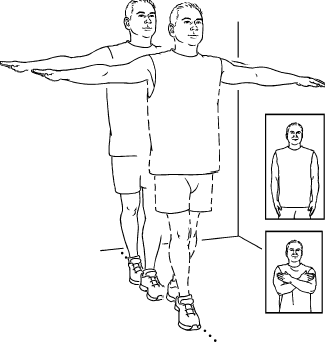
This move is another highly effective option for enhancing your walking balance. It basically turns walking into a balance exercise by narrowing your base of support so your body works harder in order to keep things stable.
How to do it
- Stand up straight and tall.
- Raise your arms sideways to shoulder level.
- Place one foot directly in front of the other in a heel-toe fashion.
- Walk heel-toe in a straight line for about 5-10 meters before returning to the starting position.
- Repeat 4-5 times.
Mistakes I Commonly See
- Tryng too much too soon: This exercise can be too tricky for some. You don’t need to force yourself through it if you can hardly maintain balance. Start with a slightly wider base(a few centimeters between feet) then progress as needed.
Progression
- Simply fold your arms across your chest.
- Once you’ve mastered the walk, try to up the challenge by closing your eyes.
- Increase the distance by 50-100%.
Safety Considerations
- Again make sure you perform the exercise close to a wall or any stable object you can hold on to in case you lose balance.
- Don’t try to do too much too soon. Master the simpler variations before you get into any more challenges.
Side steps
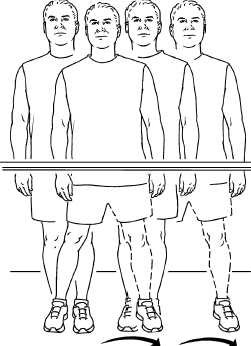
Moving efficiently isn’t all walking back and forth. Sometimes, you need small subtle side steps to manoeuvre around in a safe manner. Think things like turning to either side or negotiating a rough terrain that needs you to make a variety of steps at varying angles.
How it's Done
- Stand up straight, feet placed at a few centimeters from each other.
- Take a big step straight out to the side, followed by the trailing leg to complete the movement to a new spot.
- Repeat the sequence till you hit 5-10 meters.
- Reverse the sequence to the starting position.
Common Mistakes I see
- Shuffling: Most seniors attempt to compensate by shuffling feet during the movement. Try to take a proper side step by lifting your moving foot off the floor.
Progression
- Try to perform the movement with closed eyes.
Safety Considerations
- Don’t force through the progression. Master the movement with open eyes at first before moving to the harder version.
Strength Exercises for Key Muscle Groups
Sit-stand
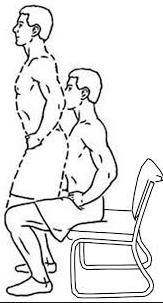
If you have to rock back and forth everytime you need to dtand up, this move should be part oof your routine. It takes a simple, everyday movement pattern and turns it into a practical and effective way of building strength, balance and coordination. As the name suggests, it emphasises proper mechanics in the basic sit-stand transition while providing a good workout to key muscle groups.
How it's Done
- Sit on a bench or chair, with the chest slightly drawn out. Feet should be flat on the floor at shoulder width.
- Slightly lean forward and use your hips and legs to power yourself into a standing position.
- With control, return to the starting position.
- Repeat the movement 10-12 times. Aim for 3-4 sets.
Common pitfalls I see in the clinic
- Abscent forward-swing: Naturally, everyone swings their trunk forward a little to gain some momentum and transfer most of the load to legs. Very often, I see seniors try to skip the natural pattern by pushing off the chair or bench. This leads to a faulty sit-stand pattern that pushes the risk of falling even further.
- Uncontrolled descent: Make sure you stay in control when reverting to the initial sitting position. This keeps your muscles working throughout the movement.
Progression
- You can replace the stable chair or bench with a medium-sized gym ball to further challenge your balance during the initiation and return phase of the movement.
Safety considerations
- Don’t force matters if the sit-stand transition is too difficult for you. You can use extra support i.e pushing down the chair or any aids like standing frames.
Wall Slides
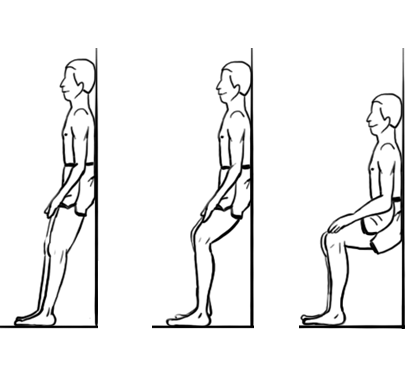
This exercise is a modified version of the classic squat, which is one of the most effective exercises for building strength in some key muscle groups of the lower body. These include Quadriceps and Glute muscles, which are key drivers of knee and hip joint movements.
How it's Done
- Stand tall and lean on a wall with your upper back.
- Shift your feet a step forward while maintaining contact with the wall using the upper back.
- With control, lower your body down to the point where your hips are parallel to the floor.
- Return to the starting position.
- Repeat the movement, 10-12 times, 2-3 sets.
Common Mistakes I see in the clinic
- Leaning forward: One of the key issues I deal with consistently is over-compensation by leaning forward. This is the body’s natural attempt to take some load off the legs. Make sure you keep your entire back on the wall throughout the movement.
Progression
- Place a gym ball between your back and the wall. This creates a less stable platform to move against, which means more input from the key drivers of the movement.
Safety Considerations
- Start with a small number of reps(5-8) while paying attention to your body’s response.
- There’s no need to force the exercises if you’re experiencing severe joint pains or discomfort. Your physiotherapist can always find better alternatives.
The Bridge
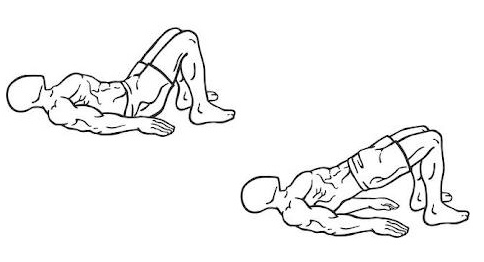
The bridge offers an effective option for working on your Glutes and core muscles. The exercise basically requires you to extend the hip joint while maintaining a stable back and core, making it a great alternative for working on these muscle groups.
- Lie down on your back, with arms fully stretched along the sides.
- Bend your knees and bring your feet flat on the floor.
- Lift your waist off the floor till your hips are fully extended.
- Hold the position for 15-20 seconds.
- Return to the starting position. Repeat 3-4 times.
Common Mistakes I see in the clinic
- Holding your breath: Most people tend to hold their breath during the lift and hold. This is conter-productive as it makes it harder to focus and get the most out of the driving muscle groups.
Progression
- Reduce the base of support by simply folding your arms across your chest. Once you get comfortable with this, try lifting one foot off the floor while maintaining the pelvis’ position.
Safety Considerations
- Don’t rush through the difficulty levels. Make sure you completely master each level in terms of form and proficiency before moving on.
- Consult your physiotherapist if you have preexisting back issues.
When I’d Strongly Recommend Seeing a Physio
Getting started doesn’t have to be lonely at all. Seeking professional help might just be the best move you may ever take. Don’t hesitate to seek for physiotherapy assistance in the following cases:
Falls history
Physiotherapists are equipped with the tools to conduct a comprehensive assessment needed to identify your key risk factors and devise the best ways to mitigate them. Remember, your risk for falls is determined by a complex interaction of numerous factors, and a professional risk assessment allows you to identify the key culprits. This makes planning and implementation way easier.
Chronic conditions needing supervision
Pre-existing chronic conditions like Arthritis, Hypertension, Diabetes need to be considered before committing to any exercise program. The reason is that they have a direct effect on the dosage and choice of exercise. Additionally, chronic conditions come with higher risk of adverse side-effects due to the stressors that come with exercise.
Sounds familiar? reach out to us here.
The 3-question fall risk assessment I use in my St Clair clinic
Before we jump into comprehensive tests and exercises, 3 main questions give me a good picture of what your overall risk looks like:
- Have you had any falls in the past 12 months? Even a single fall often gives some valuable insights in how you’ve been doing in the short and long term.
- Do you ever feel unsteady whenever you’re engaged in everyday activities like standing up, walking etc? If going about your everyday activities feels abit shaky, there may be some more specific things to look into.
- Have you cut back from some things you used to do because you’re afraid of falling? This gives some initial insights on how some changes are affecting your readiness/capacity to engage in some physical activities.
Get in Touch
Are you looking to manage your falls risk with a tailored exercise program? Our physiotherapists bring years of practice and specialisation in exercise prescription. We’re looking to be part of your journey to a stronger and steadier you. Give us a call today, or visit the contact page for an initial assessment. Looking forward to hearing from you.
Frequently Asked Questions
If you’re already cleared by medical professionals to start an exercise program, the exercises discussed above could prove a good starting point. However, caution should be exercised: start with the simplest forms then slowly build to more challenging ones. If you’re still unsure, a visit to the physiotherapist should be the best move to ensure clarity, safety and effectiveness.
There’re dozens of exercises you can use for tangible benefits. However, some simple double and single-leg exercises offer great options for a start. Good examples include sit-stand exercise, tandem walking, step ups, side steps, and single-leg stance. Please check the last section of the article above for more details.
Most individuals over 65 years with Diabetes or hypertension can safely engage in balance exercises. In fact, exercise is a key part of effective management in these conditions. The key is in engaging with a qualified and experienced professional to take you by the hand and get you started in a safe and effective manner. You can reach out to our physiotherapists through the appointment button above for a start.